
Ngahuru, tōnui te kai, tōnui te tangata: A season of abundance
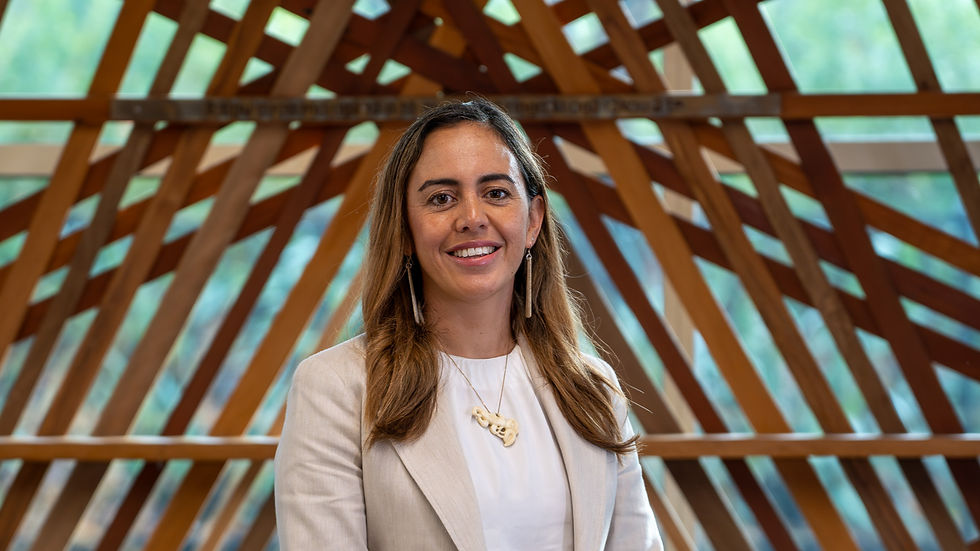
By Dr Hinurewa Poutu, Head of Reo and Tikanga, Whakaata Māori, Aotearoa.
Ngahuru has arrived in Aotearoa (New Zealand). This season, aligning with autumn, marks a traditional time of harvest, slowing of pace after summer, cooler temperatures, shorter days, and a turning inward. It is a time to gather, to reflect, and to take stock of what has grown from the labour of previous seasons. While it is ngahuru here on our lands, many Indigenous communities across the world share similar cycles of growth, reflection, and renewal. Ngahuru is never just about what is yielded from the land, it is also about what must be protected, stored, and replanted so that abundance may continue. This season coincides with Whakaata Māori marking 22 years since its establishment. Like the time for harvest, this moment invites us to reflect on what has been cultivated, not only for the Māori language in Aotearoa, but also alongside our Indigenous kin across the globe. What sustains us now, and what must be carefully tended if abundance is to endure.
Seeds Planted Long Before Us
Whakaata Māori was born of a movement for language and cultural revitalisation. It is a response to generations of language suppression and loss, and a deliberate act of restoration. Through legislation and Te Tiriti o Waitangi, the foundational treaty that established government in Aotearoa, the purpose of Whakaata Māori is to preserve, protect, and promote te reo Māori me ngā tikanga Māori. We exist not simply to broadcast content, but to serve the intergenerational wellbeing of a taonga (treasure) promised through Te Tiriti.
As with any harvest, the fruits we enjoy today are not the result of recent efforts alone. The seeds were planted generations ago by our elders, activists, educators, broadcasters, and families who refused to let the language disappear. Some planted in times of great hardship, when speaking te reo Māori was actively discouraged or punished. These pioneers were a faithful few whose unwavering commitment we continue to benefit from today. Others planted through innovation, creating kōhanga reo (language nests), kura kaupapa Māori (immersion schools), iwi radio, and eventually a national Māori television service. Whakaata Māori is part of this legacy. Our responsibility, like that of any gardener who inherits a productive field, is not only to harvest but to ensure the soil remains fertile for those who come after us.
This responsibility is shared. Whakaata Māori operates as a partnership between Māori and the Crown, an expression of the Tiriti relationship in practice. It is not an easy feat. Balancing cultural responsibility, public accountability, political realities, the enduring impacts of colonisation, and a fast‑changing media environment requires ongoing and careful negotiation. We also share this responsibility with our WIBN partners, where we exchange seeds of knowledge, experience, and innovation - drawing on each other’s strengths to nurture our languages so they are visible, audible, and increasingly normalised not only in our own communities but across the globe. These shared seeds must be carefully tended if they are to take root and flourish. That negotiation continues, particularly in the pursuit of equity of provision, recognition, and long‑term, sustainable support.
The Promise of the Dawn
When Whakaata Māori first launched, it carried the promise of a new dawn. For the first time, te reo Māori was not confined to marginal spaces or limited timeslots, but held centre stage on a national platform. Twenty‑two years on, that promise remains. A whole generation of young adults has grown up with Whakaata Māori playing in the background of their lives - cartoons in Māori, political debates, sport, drama series, and live events of national significance.
This matters. Language is sustained through presence. Through repetition. Through hearing it used naturally across genres and contexts. Media creates the soundscape of everyday life, and when te reo Māori, and ultimately each of our Indigenous languages, is part of that soundscape, it shifts what feels normal, what feels possible, and what feels valued.
Yet the challenge remains. We continue to navigate the tension between reach and depth - between audience numbers and language outcomes. In publicly funded media environments, success is often measured through metrics that do not easily capture cultural or intergenerational impact. Staying true to our purpose requires clarity and long‑term commitment, particularly when funding structures and political priorities shift.
Abundance and Planning
We are living in a time when te reo Māori, and many Indigenous languages, are more visible and audible than decades ago. This is thanks to grassroots revival efforts, political movements, education, and Indigenous media. Here in Aotearoa, everyday Māori phrases are widely used. Māori place names are increasingly restored. The language is present in mainstream broadcasting, advertising, and public life.
Content linked to WIBN is also gaining international recognition. Recent examples include NRK’s Oro Jaska series nomination for an Emmy® Award, APTN partnering with CBC and Netflix on the first Canadian original series set in the Arctic Circle. These are signs of success, and they are worth celebrating collectively. However, the climate remains precarious. Across the globe, political policies continue to restrict Indigenous expression, funding tightens, and global media giants encroach into spaces Indigenous broadcasters have fought hard to protect. In some regions, war and conflict are directly impacting our ability to connect, to work, and to sustain ourselves.
Harvest is always accompanied by foresight, by the careful storing of food, the saving of seed, and preparation for leaner seasons. The same is true for language. Visibility does not automatically equal vitality. While more people here in Aotearoa hear te reo Māori, it is well understood that it takes only one generation to lose a language, and three to ensure its survival within a family.
Media plays a crucial role, not as a replacement for home and community use, but as a powerful complement. We reflect language back to our communities, reinforce its value, and help shape perceptions of what is “cool,” normal, and aspirational, especially for our tamariki and rangatahi.
Media as Pātaka — Storehouses
Traditionally, a pātaka is a raised, carved storehouse built to protect food supplies through changing seasons, keeping them safe from damp, pests, and decay. Indigenous media functions in much the same way. Across our network, WIBN acts as a global pātaka, expressed in different forms, holding language and knowledge across nations.
Our platforms act as storehouses for stories, knowledge, and worldviews. We capture and preserve. We showcase and celebrate. We hold dialects, oratory styles, contemporary expressions, and ancestral narratives in forms that can be accessed across time and space. In moments of political uncertainty or cultural pressure, these pātaka become even more important.
Yet pātaka require maintenance. When funding criteria prioritise reach without equal consideration of language and quality, the nourishment of what is stored is affected. When policy settings fail to protect the presence of Indigenous languages and perspectives in public life, the pātaka is left exposed.
Changing Climate
The legislation that established Whakaata Māori speaks directly to television broadcasting. Yet today we operate within a vastly expanded media ecosystem shaped by social media, livestreaming, on‑demand platforms, and artificial intelligence. Only recently has WIBN, formerly known as WITBN, dropped the “T” that stood for television in recognition of the diversity of platforms now in use across our network. Like the campfires of ancient times, the technologies of storytelling change, but the human need for story remains.
Adaptation is essential. Innovation allows us to reach new audiences, particularly younger generations whose media habits differ dramatically from those of their parents. Technology can amplify language exposure and create new pathways for engagement. Yet as Indigenous media expands into new platforms, we must remain conscious of intellectual property, cultural authority, and the protection of cultural knowledge.
If we are too restrictive, the language risks stagnation. If we are too permissive, we diminish the essence of our taonga. The balance is delicate, and it requires constant reflection and shared responsibility.
Growing Generations
After a long period of language decline, a new generation is growing up with Whakaata Māori as a companion. Not all may be proficient or confident speakers, but they are familiar with the sound, rhythm, and presence of te reo Māori. New language learners, Māori and non‑Māori alike, have a genuine hunger for content. Across the globe, many Indigenous communities are also reclaiming and celebrating language through media. This is where Indigenous media networks such as WIBN have a unique and powerful role, enabling shared learning, collaboration, and collective strength across our networks. We do not merely inform, we shape identity. We contribute to confidence, pride, and a sense of belonging. We influence what is considered valuable, relevant, and modern. This is a shared responsibility.
Tending the Balance
Since its inception, there has been long‑standing debate about the extent to which Whakaata Māori provides a language experience. Should it cater primarily to fluent speakers through immersion content, or should it aim for a broader audience, mixing language content with English, in order to shift attitudes and normalise the language? Our WIBN partners also hold the unique responsibility of stewarding hundreds of Indigenous languages across multiple nations - making decisions about how much time to allocate to which language, and whose perspectives are prioritised, within limited time and resources. This debate continues, and perhaps it always will. It reflects a deeper tension between protection and promotion.
For Whakaata Māori in Aotearoa, our sights remain fixed on the future. Te Huapae, our outcomes framework, sets the vision we hold for ourselves, kia mauriora te reo, a future where te reo Māori flourishes like the crops of ngahuru, thriving across platforms, generations, and communities.
With changing political weather in Aotearoa, the introduction of a bill to recognise English as an official language, and funding cuts across the Māori language and media sectors, decisions made now are shaping the conditions of the field we are tending, and the success of future harvests. Each WIBN partner across our nations faces local challenges, and we must continue to share, support, and advocate within our network to secure ongoing commitment toward a thriving future.
Looking to the Next Season
Media alone cannot revive a language. But without media, revitalisation efforts are significantly weakened. As Indigenous media platforms and storytellers, we do not replace the role of families and communities in passing on the seeds of language and culture. We complement them. We create the conditions for language to be seen, heard, and valued at scale. As we stand in this season of ngahuru, surrounded by the fruits of decades of effort, we must remain vigilant. The harvest we enjoy today must become the seed we protect for tomorrow. For Indigenous broadcasters within WIBN, this is our collective task - to guard the pātaka, nourish the soil, and ensure the next generation inherits not scarcity, but sustained abundance.
About the Author
Dr. Hinurewa Poutu from (Ngāti Rangi, Te Āti Haunui-a-Pāpārangi, Ngāti Maniapoto) is Tumu Reo me ngā Tikanga (Head of Language and Cultural Practice) at Whakaata Māori in Aotearoa, New Zealand, where she leads the organisation’s reo (language) and tikanga (cultural) strategy, embedding te reo Māori as a living, everyday language across all platforms.
A linguist and PhD graduate in Māori language education, she is a former Māori Language Commissioner and a dedicated advocate for language revitalisation. Her leadership continues to strengthen Whakaata Māori’s role as a key part of Aotearoa’s reo Māori infrastructure.
This article is part of the WIBN Global Indigenous Media Leadership Series.